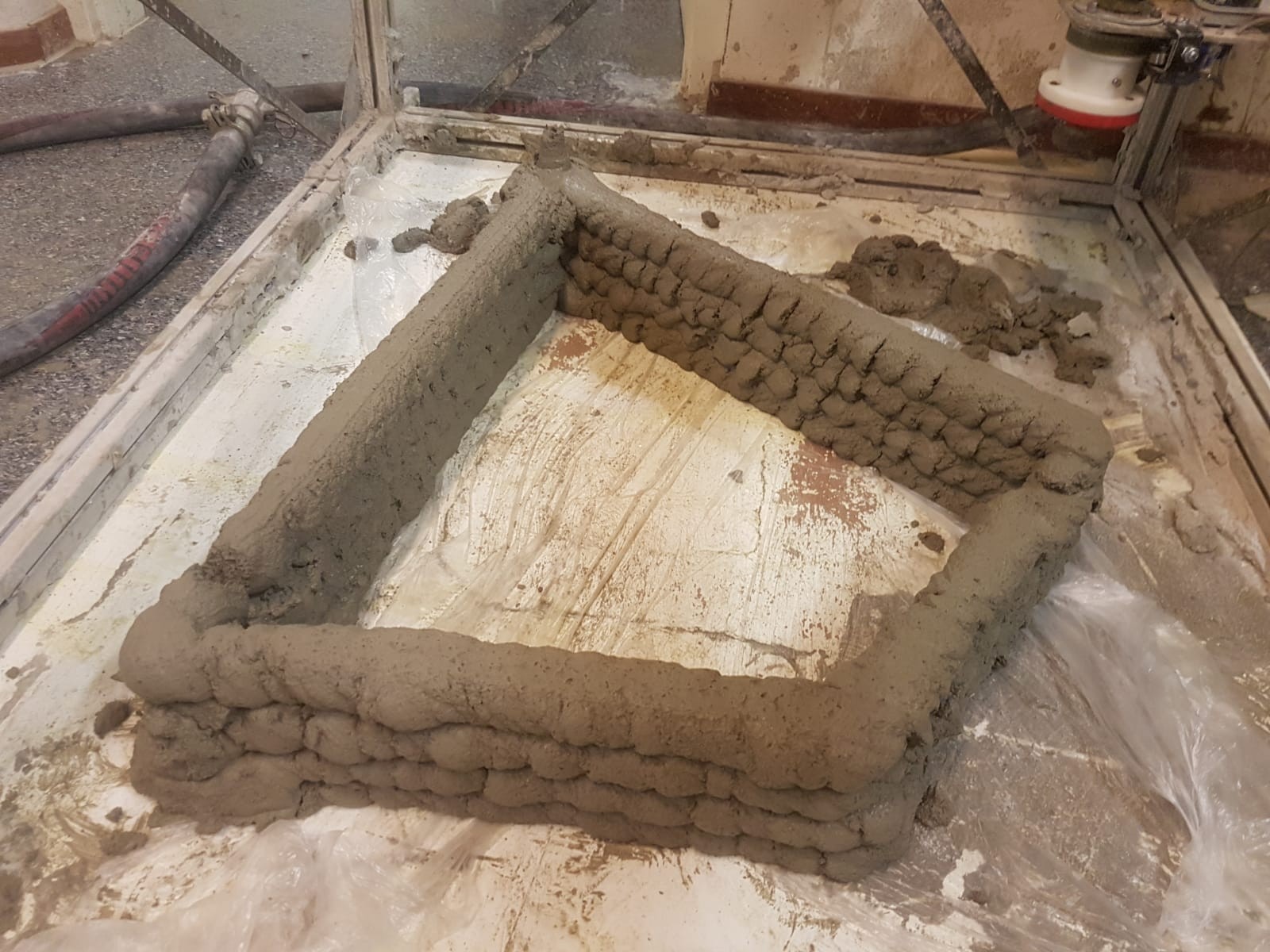
3D concrete printing is a technique that shows a great potential for the construction sector. The RAAK-mkb KONKREET project, which ended in 2018, provided many insights in the field of 3D concrete printing for the Research Group Industrial Design and the partners involved. (van Beuren & Vrooijink, 2018)
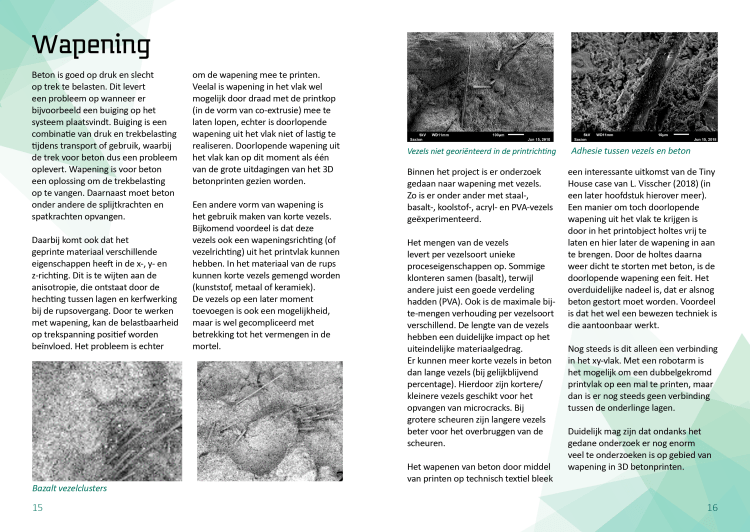
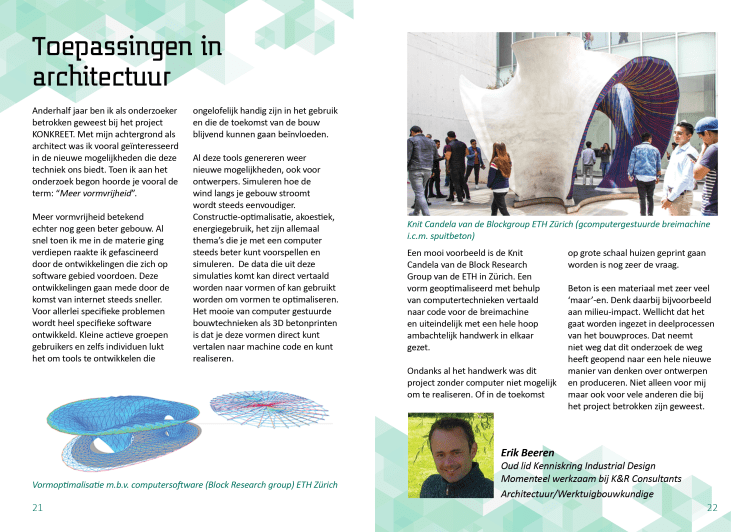
One of these insights is that by layer building the object with 3D concrete printing, reinforcement can still be seen as a challenge. After all, if the reinforcement is already there when the print head passes, it is in the way of the print head, and when it has to be applied later, the concrete may already have hardened. This “reinforcement problem” ensures that reinforcement from the printing surface cannot be realized in situ. Within RAAK-mkb KONKREET project, a solution with technical textiles has been devised to reinforce this. The formable textile can hereby be pressed against the surface during the printing process.
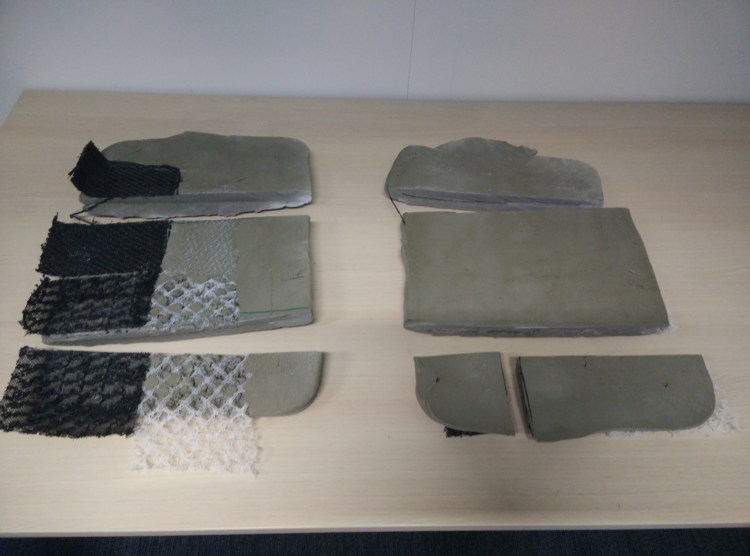
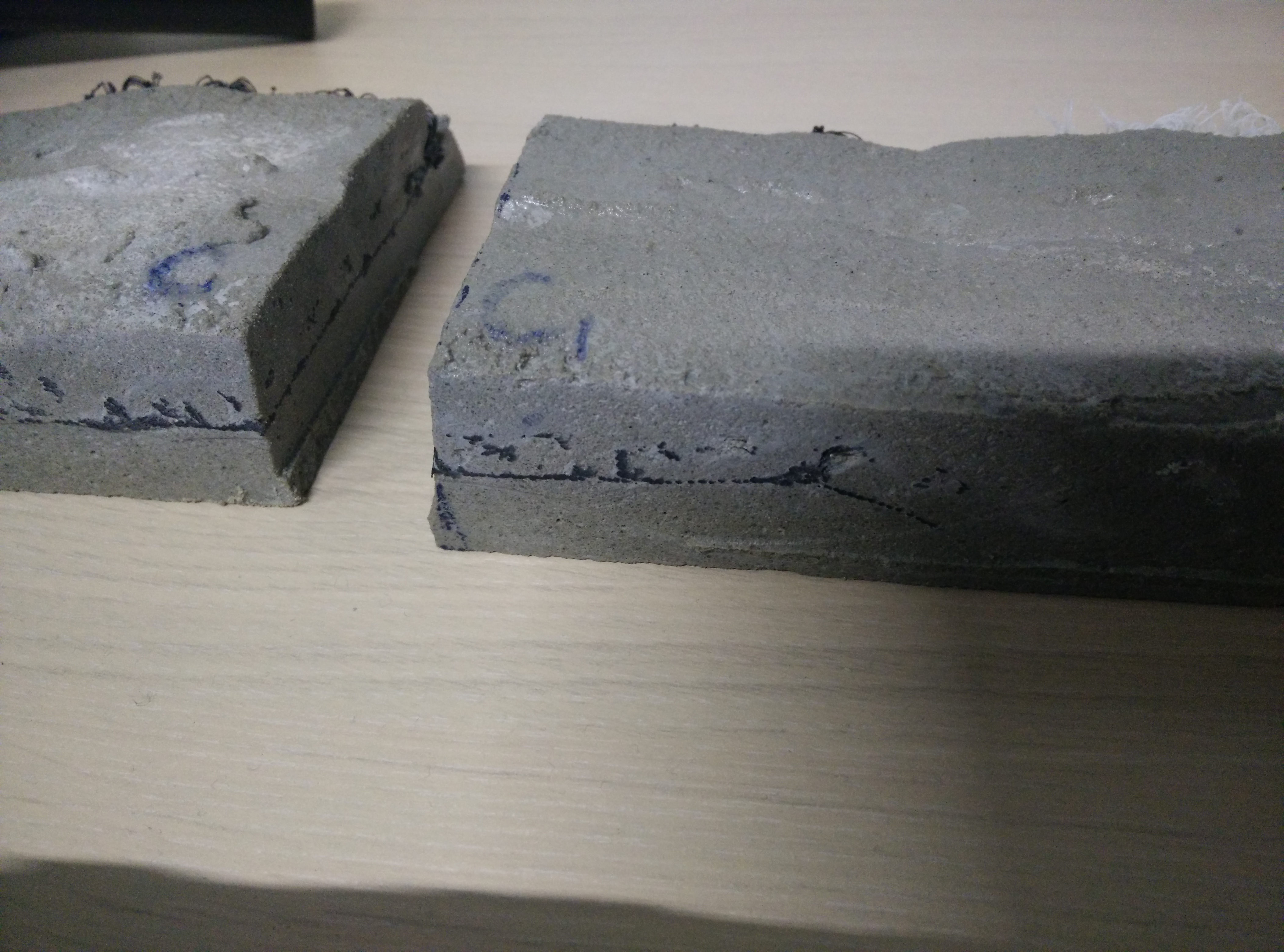
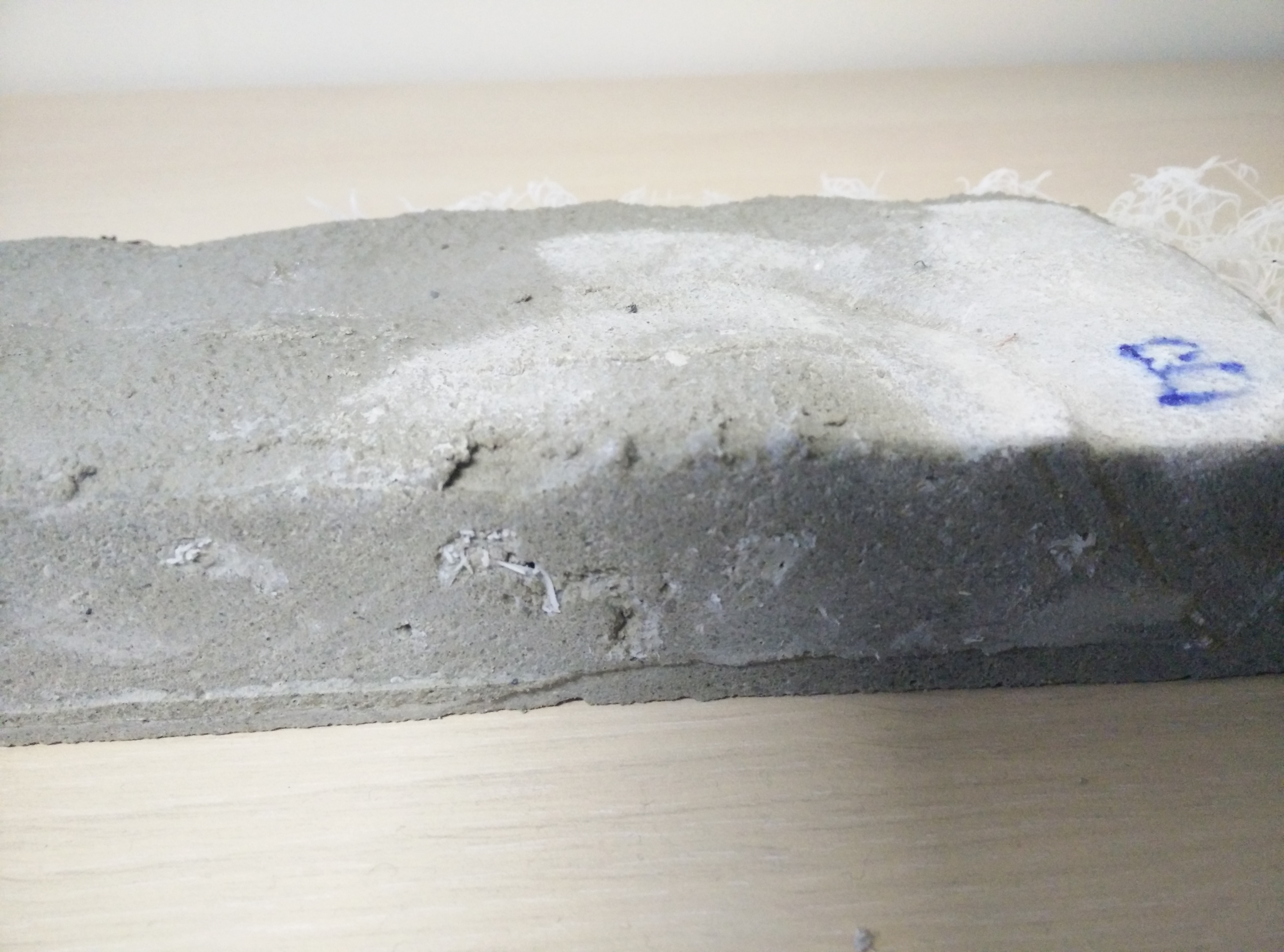
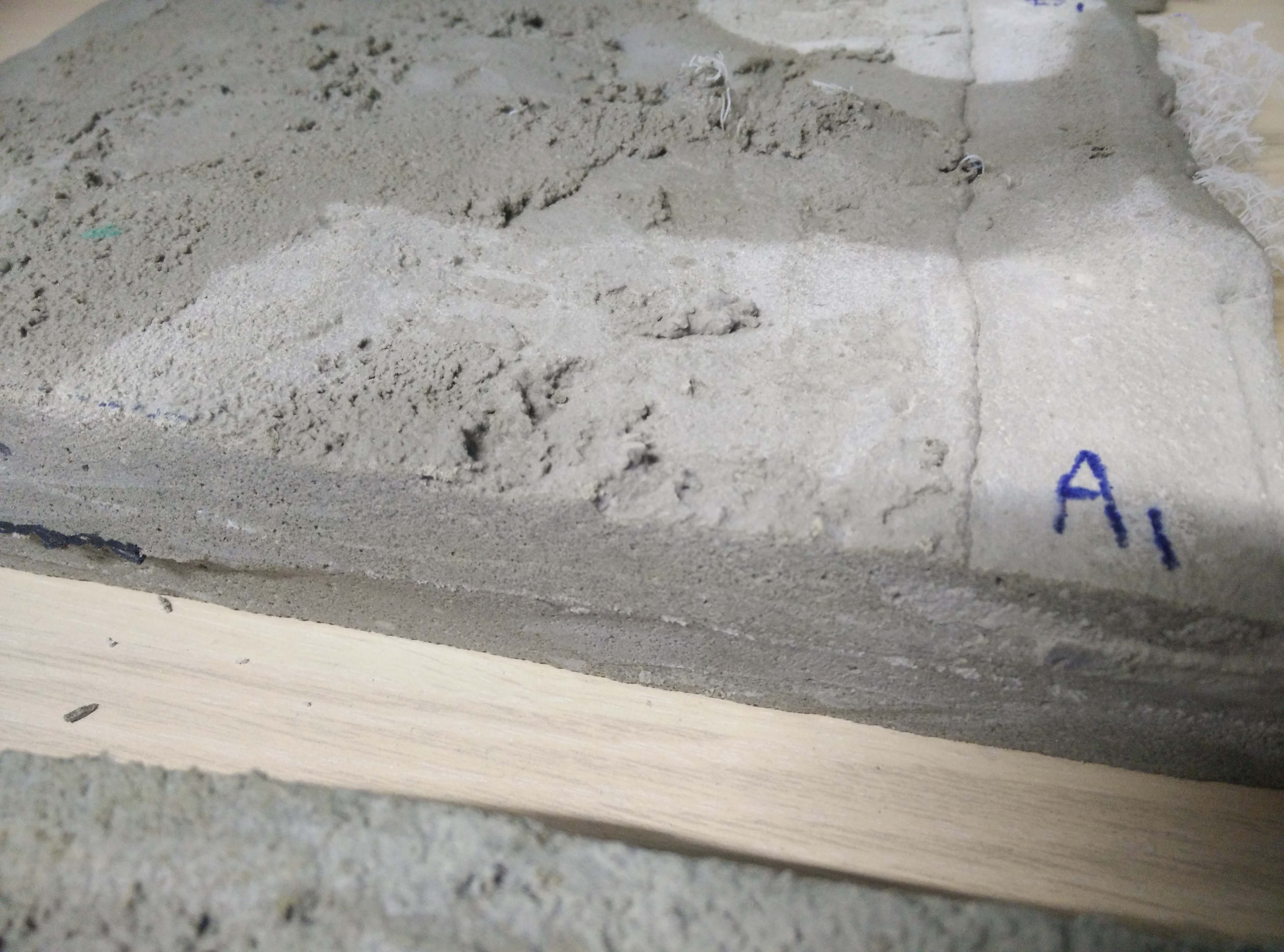
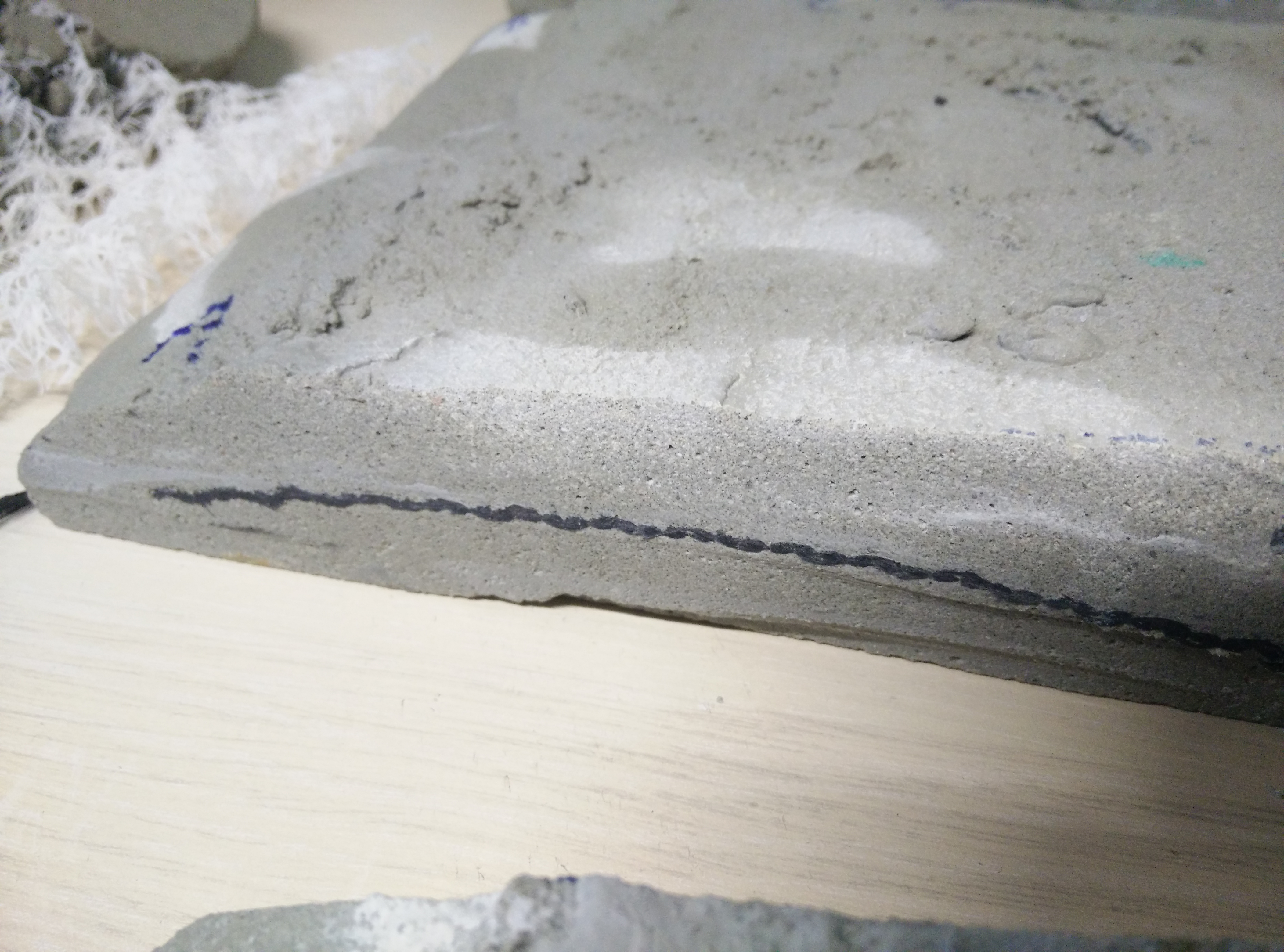
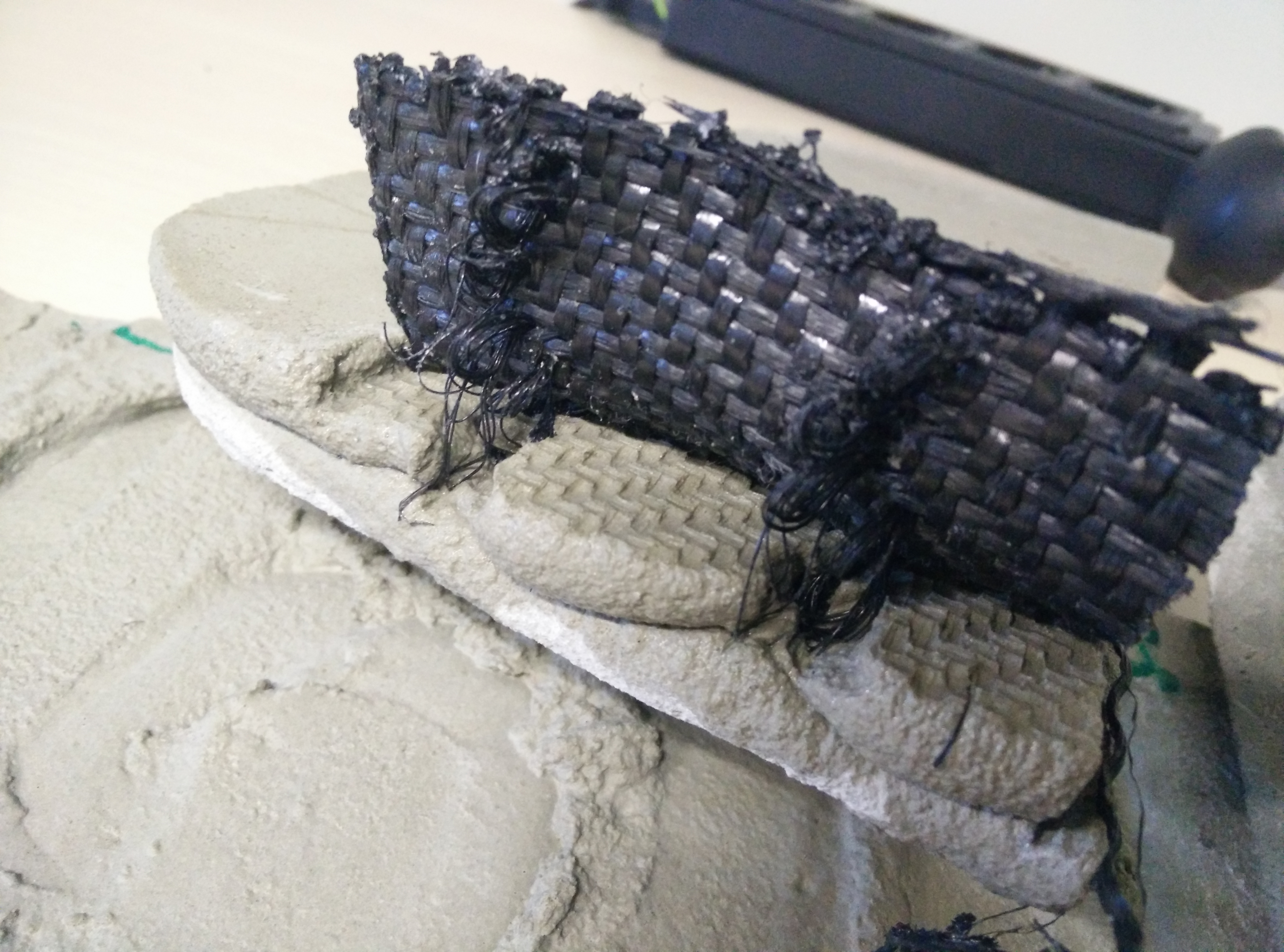
We started with the first experiments. Binding of textile to the concrete without leaving air inside is essential for the mechanical properties of the construction.
The challenge in this project is not only finding a suitable way to apply textiles onto concrete but also finding the criteria related to the choice of suitable textiles.
First tests showed that the adhesion of textiles is much better than just applying it with pressure. Results can be seen in the gallery below. Our next steps will be in the direction of applying textile along the geometry, not only between the layers.
Appication of textile onto 3d printed concrete requires a specific print head design. Max van de Riet investigated several designs that could ensure multilayer textile positioning integral to the concrete flow.
The freedom of form that the 3D printing process offers, combined with design techniques such as Generative Design (parametric design), gives designers and engineers the ability to make forms and structures that were previously not possible. Now that the development of our own the 3D concrete printer reached a consistent production quality, it is interesting to actually realize theoretical cases. One of the theoretical cases is a dome made of unique blocks which serves as a housing for a composter machine. The structure is intended to be placed outdoors and pilot localizing the composting of kitchen and garden biowaste.
The Green Dome is a concept developed by the Lectoraat Industrial Design whereby the 3D concrete print technology from Saxion, a composting technology from Twente Milieu and the innovation lab of Flow of Innovation come together in a business plan.
The Green Dome consists of a housing that can only be made by the unique advantages of the 3D concrete printer. There is a composter machine Jora JK 5100 which turns compost into green and garden waste within 2-3 weeks with daily capacity of 60 kg. The Green Dome was innitially intended to be self-sufficient with regard to, for example, water and energy in order to be deploy-able everywhere.
Within the project we conducted a research on the amount of waste gathered in the work/office space. Our findings state:
One person produces 0.1 kg of bio waste per day in an office environment and in company canteen approximately 0.2 kg per day. This corresponds to the amount of bio-waste from household waste = 0.26 kg per day according to the CBS. Moreover, the restaurant we worked with produces up to 22 kg of bio waste per day. This is more than expected and makes it worthwhile to separate and not to lose these precious resources.
The separation of bio-waste is positively received and accepted by the employees, but the existing waste bins are inconvenient to use.
Why the Green Dome as a case? Waste flow analyzes have shown that more than 30% of residual waste from households still consists of food waste and garden waste. Low-rise has a green container for this at home. For the high-rise buildings there is currently no solution for separating food waste and garden waste, which means that residents are forced to do this with the residual waste.
Various initiatives and tests are ongoing in the Netherlands to find a solution for separating food waste and garden waste in high-rise buildings. To date, no good solution has been found that is suitable for all high-rise buildings with a number of apartments from 10 to 500.
In 2015, we threw away 490 kilos of waste per year for every Dutch person. if we go for an average high-rise structure of between 50 and 250 people, then between 7000 and 37000 Kg of waste is produced per year. Separating If this waste no longer needs to be separated separately, this would be a considerable saving as well as fewer transport movements.
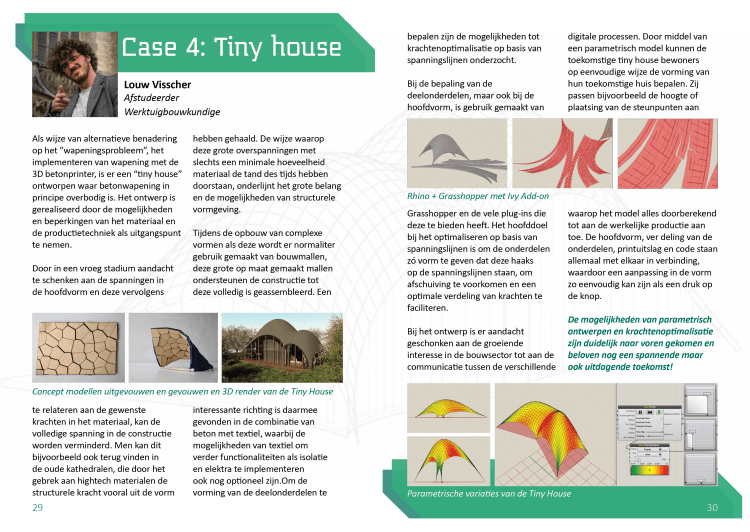
Various experiments were done with the form of the Dome. After all, we intended to have the form to follow the function and with our tools for parametric design (Rhino + Grasshopper), it was possible to create and compare many design suggestions by only changing a few parameters.
The circular aspect of the Green Dome is how we see one should plan and execute sustainable designs. Collecting and processing waste on the site reduces logistics movements and a circular neighborhood around the high-rise. The final product from the Dome in the form of ferment or compost can also be used directly in gardens or public spaces. Because the Green Dome supplies itself with energy and water, an independently functioning collection device is created that can be used in several places.
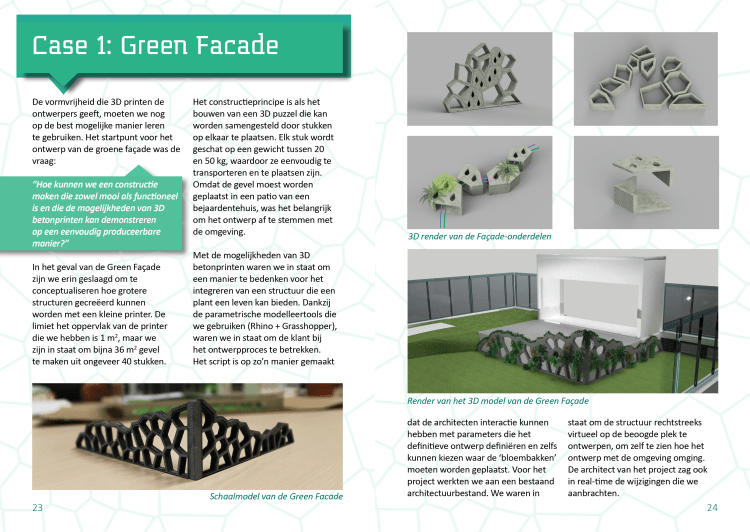
The final Dome shape consists of 58 unique blocks. The total weight of the structure is around 3 tonnes. After printing , several blocks were 3D scanned and compared in a digital environment in order to see deviations of the form due to the 3D printing technique. This step is a quality check that is yet needed in 3D printing of structural elements. In this way, the construction can be planned and executed better and easier.
CONSTRUCTION
The construction of the Dome required a custom scaffolding made by CNC Milling in FabLab Enschede. The crew built the entire structure in 4 days. The scaffolding was removed a week later. Stress test follows soon.
The Green Dome was subjected to stress-test on 09-March-2021. the strcuture withstood the load calculated according to the Eurocode for laterlal loads.
Once completed and proven safe, the Green Dome deserved a photoshoot!
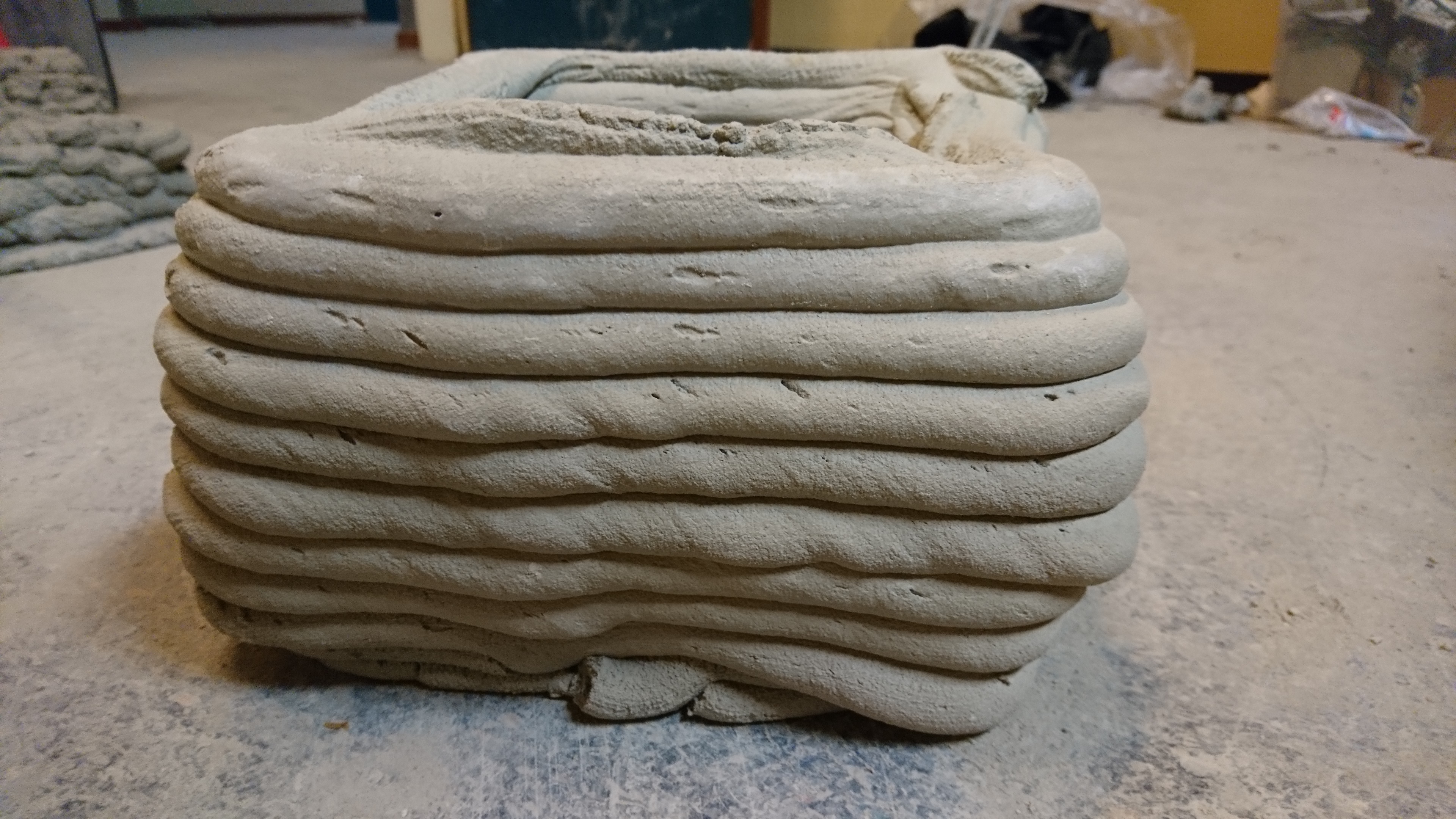
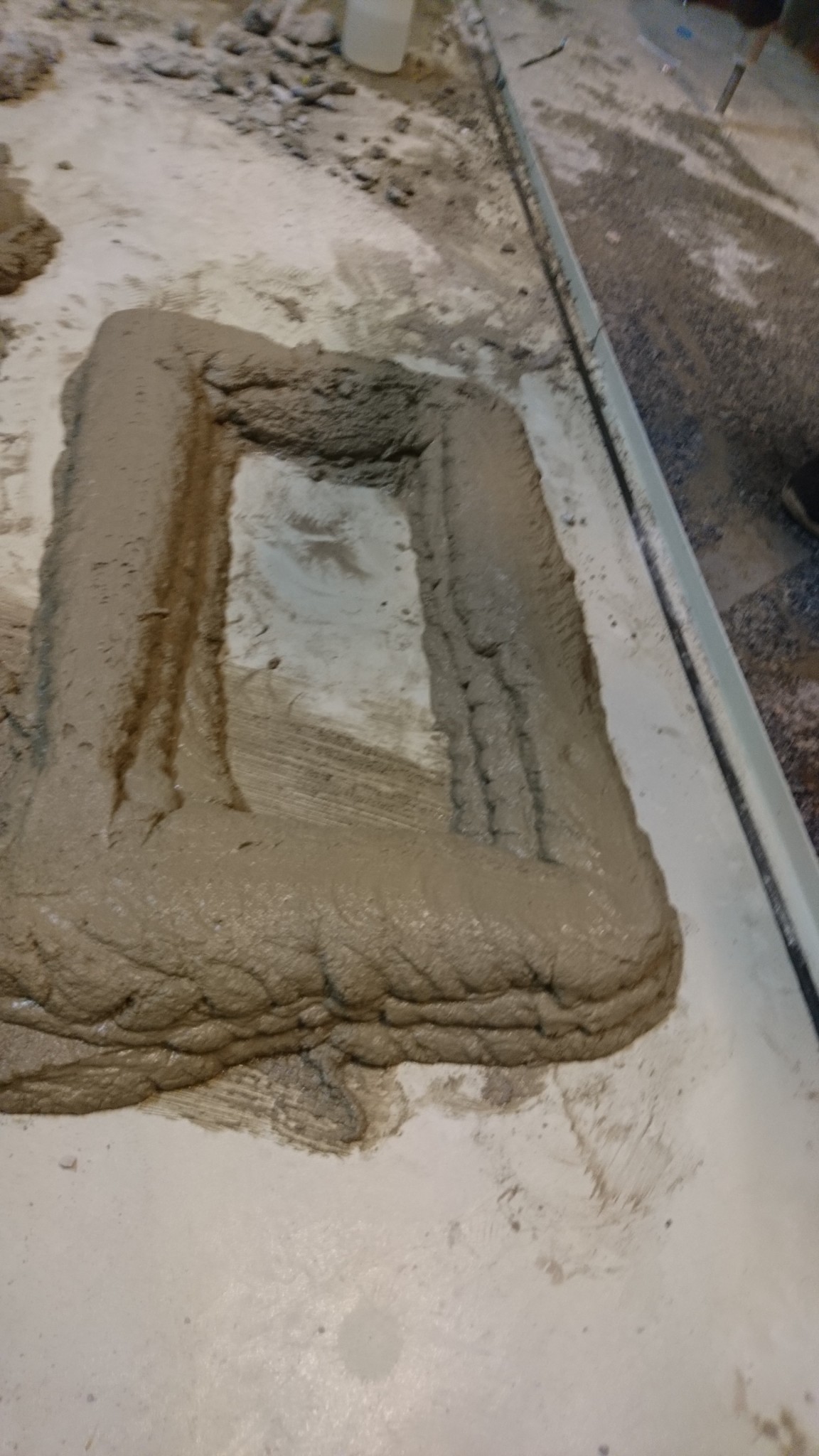
One of the insights gathered during RAAK-mkb KONKREET project is that a standard concrete recipe is not suitable for 3D printing. The lack of knowledge about concrete mix suitable for 3D concrete printing is one of the barriers to further development of 3D concrete printing. The problem with developing a successful concrete recipe is that the material is expected to exhibit contradictory properties: it must be liquid when it is pumped, but also need to be hard so it forms solid layers.
With a vast trial-and-error experience behind our backs, we investigated a great variety of recipes. We built an extensive database to relate different recipes with different printing setting and the following results. The value here is that the recipe is adaptable to the application and intent.
Together with our partners, we believes it can take a step in finding the suitable additives / recipe. To do this, the following steps are described to find a suitable recipe and to spread it in the concrete industry:
identify suitable recipes and develop test methods for screening
test recipes on a lab scale with (new) test methods
validate recipes by 3D printing
building knowledge related to the performance of 3D printable concrete in both academic and commercial environment
Together with our team, partners from the industry and students of diverse backgrounds, we developed a 3D concrete printer within the framework of the RAAK-MKB project KONKREET. We investigated not only the technical possibilities of the new technology but also applications that could truly take advantage of the new production method and answer real-life needs of the product design and construction sector.
The full list of topics investigated during the project includes:
various recipes for 3D printable concrete
configuration and control of the printer developed by the team
printing strategy and slicing of complex geometries
up-scaling
reinforcement
mix at the print-head with fast hardeners
undercuts and support
parametric modeling and generative design
Applications developed during the project:
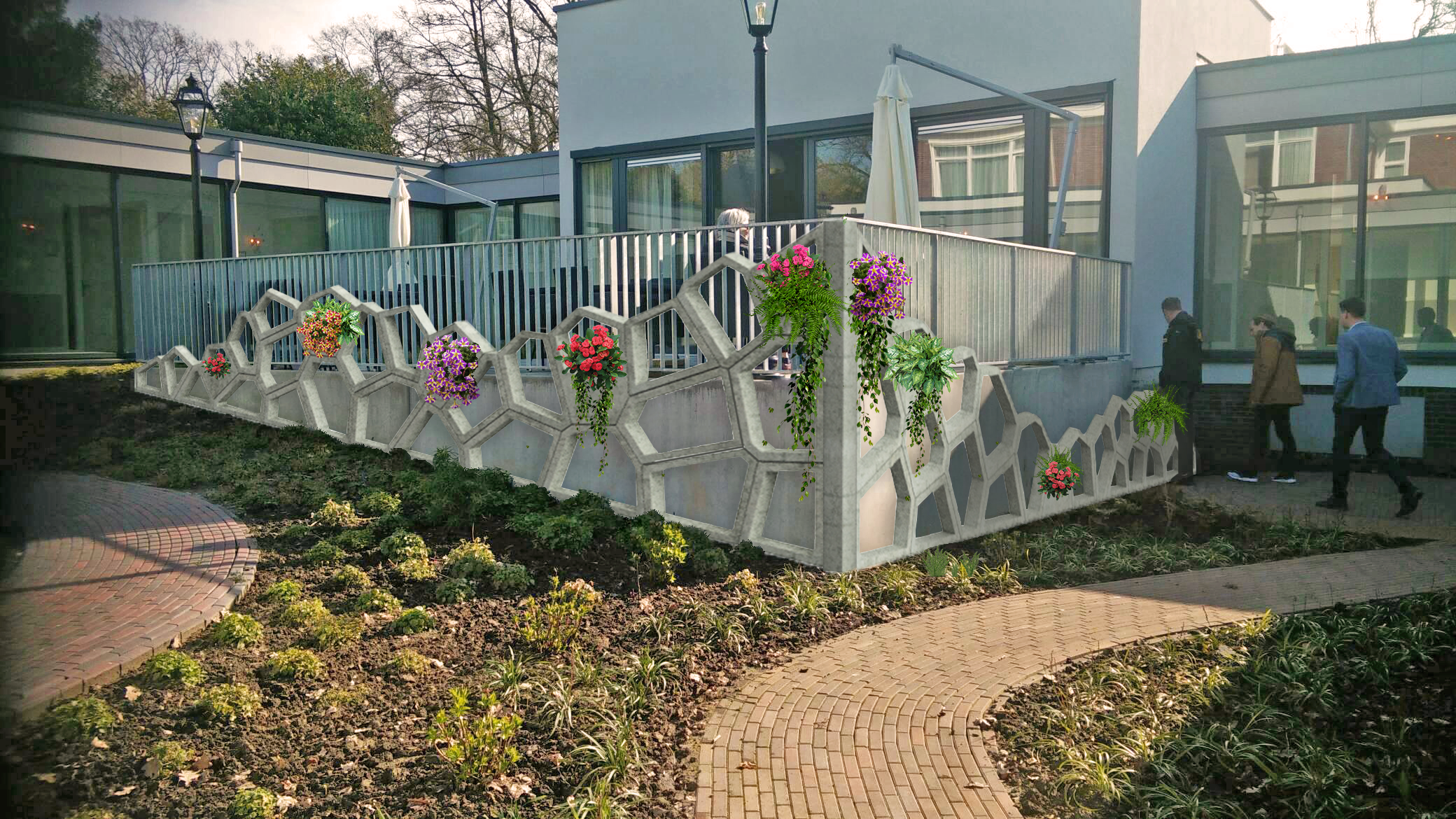
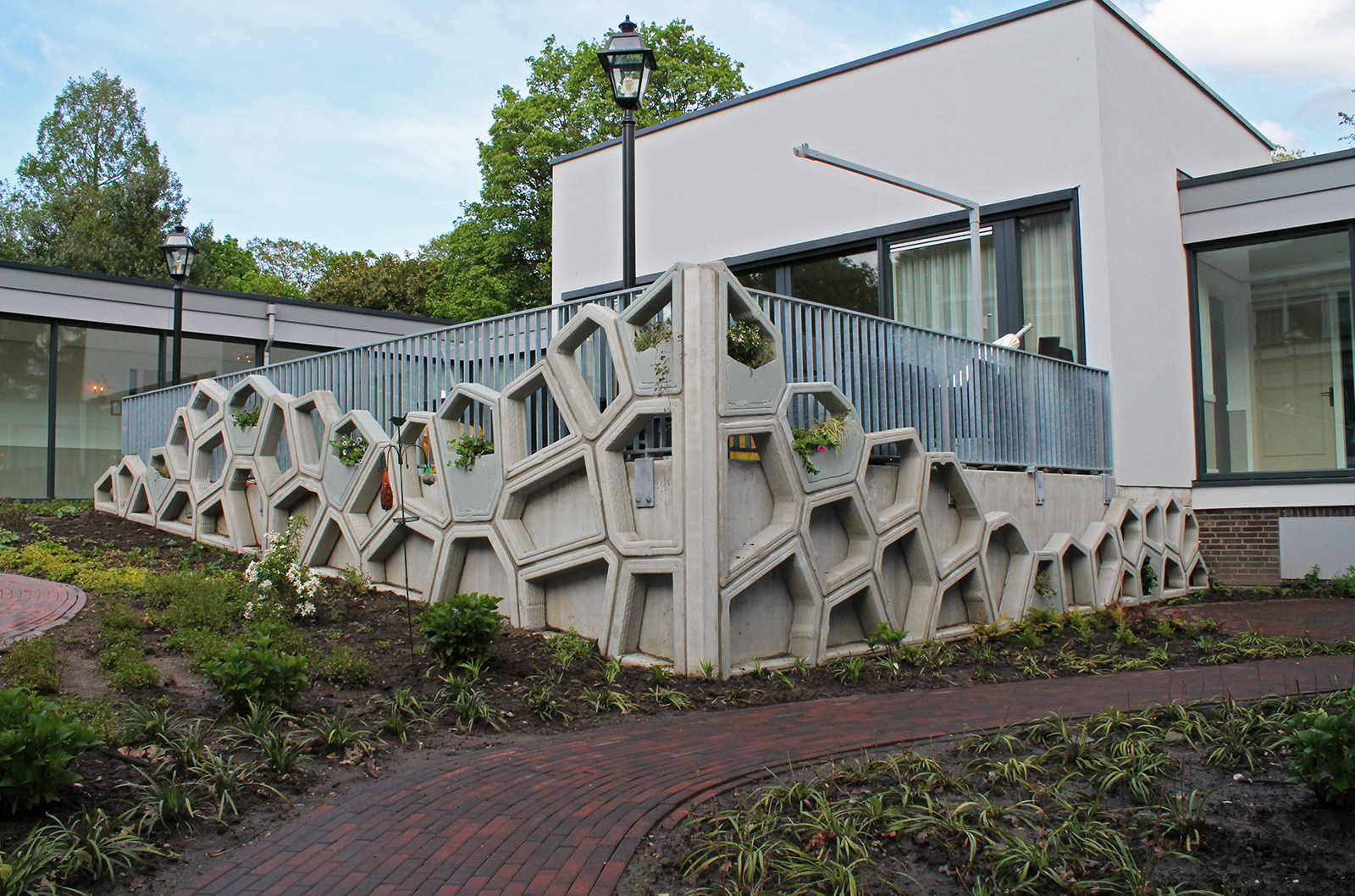
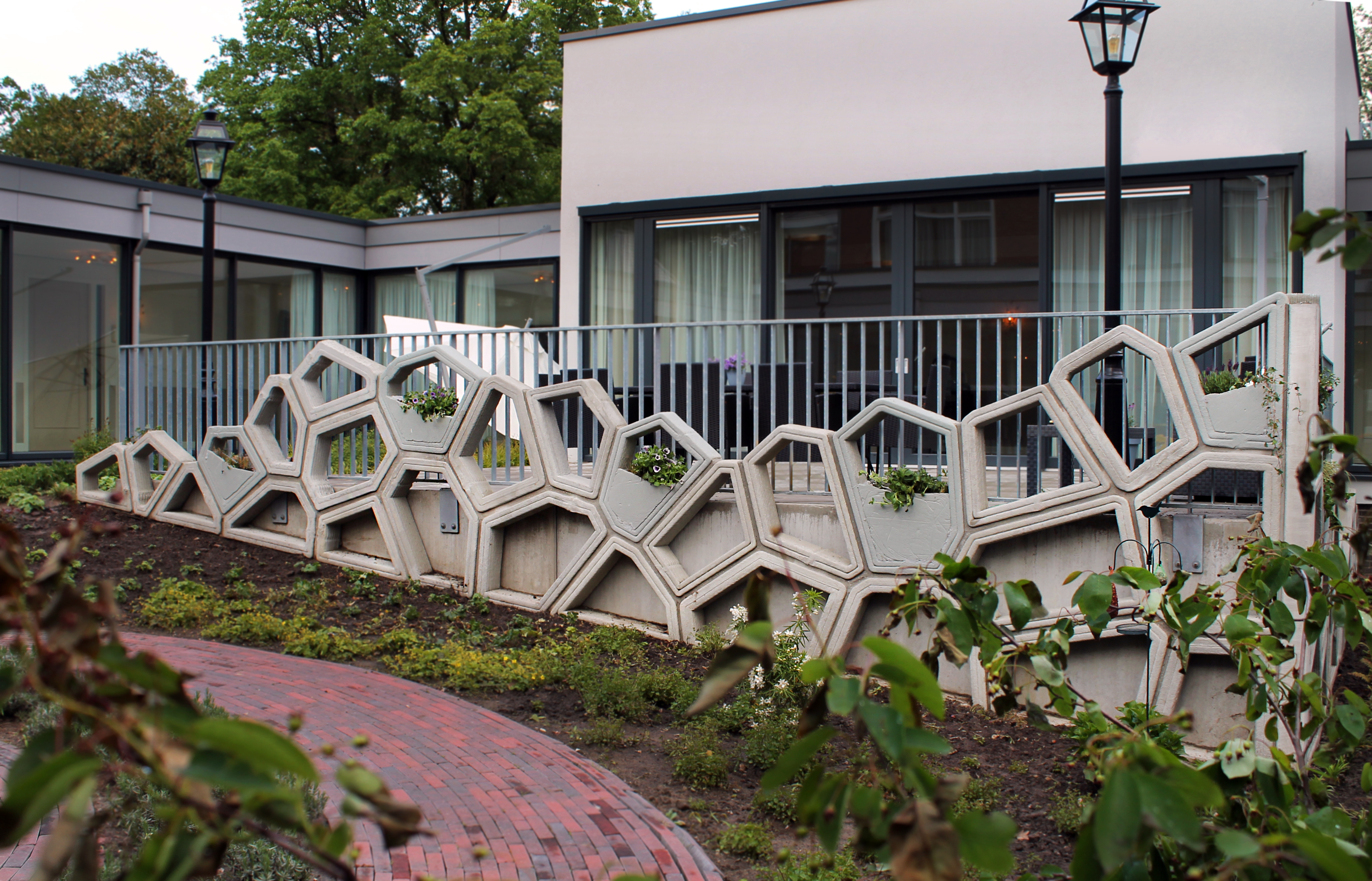
Green Facade – a fence for an inner garden of a care complex.
Green Dome – a composting unit intended for the Flow of Innovation and Enschede.
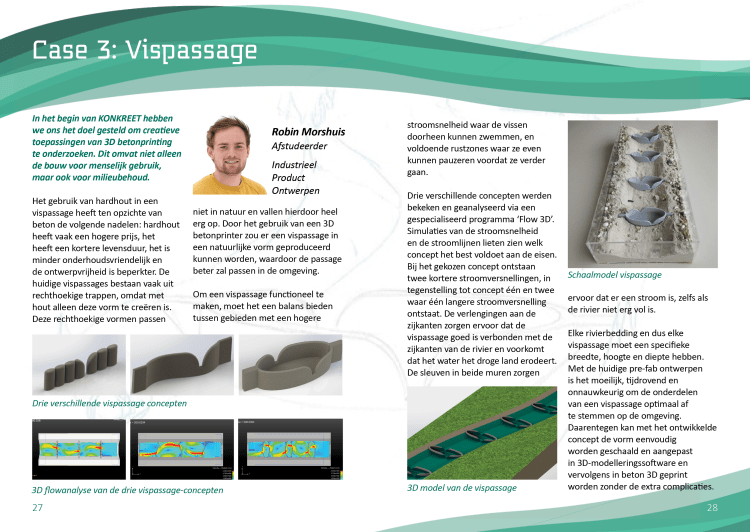
Fish ladder – passage for migrating fish
Tiny House – concrete shell printed on top of a textile sheet
The 3D printer in Saxion was made suitable for research purposes and small batches. To bring the Green Facade to life, we needed strong industrial partners. We got in touch with Vertico who delivered high quality 3D concrete printing and Trebbe, who ensured safe and professional build-up.
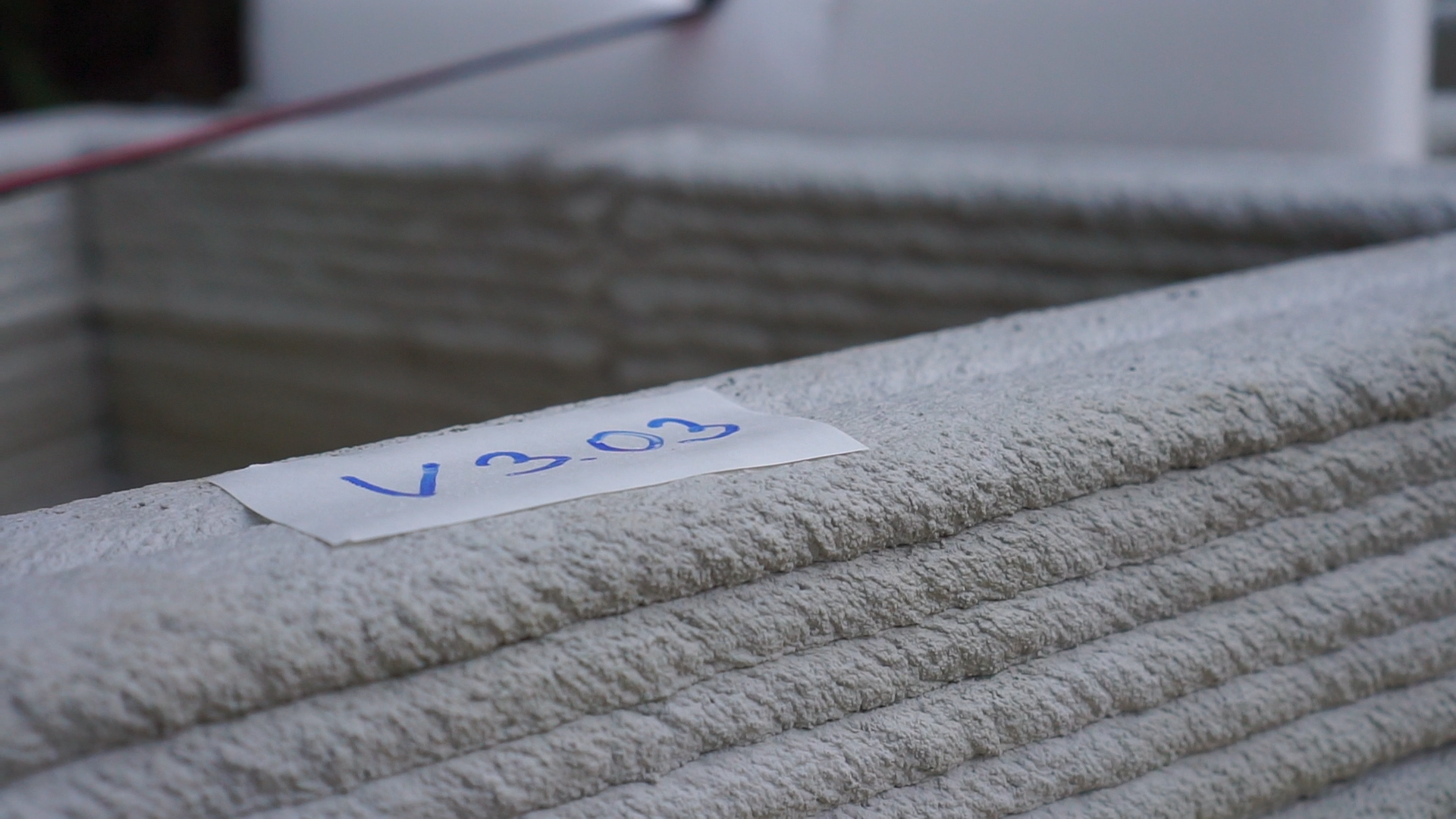
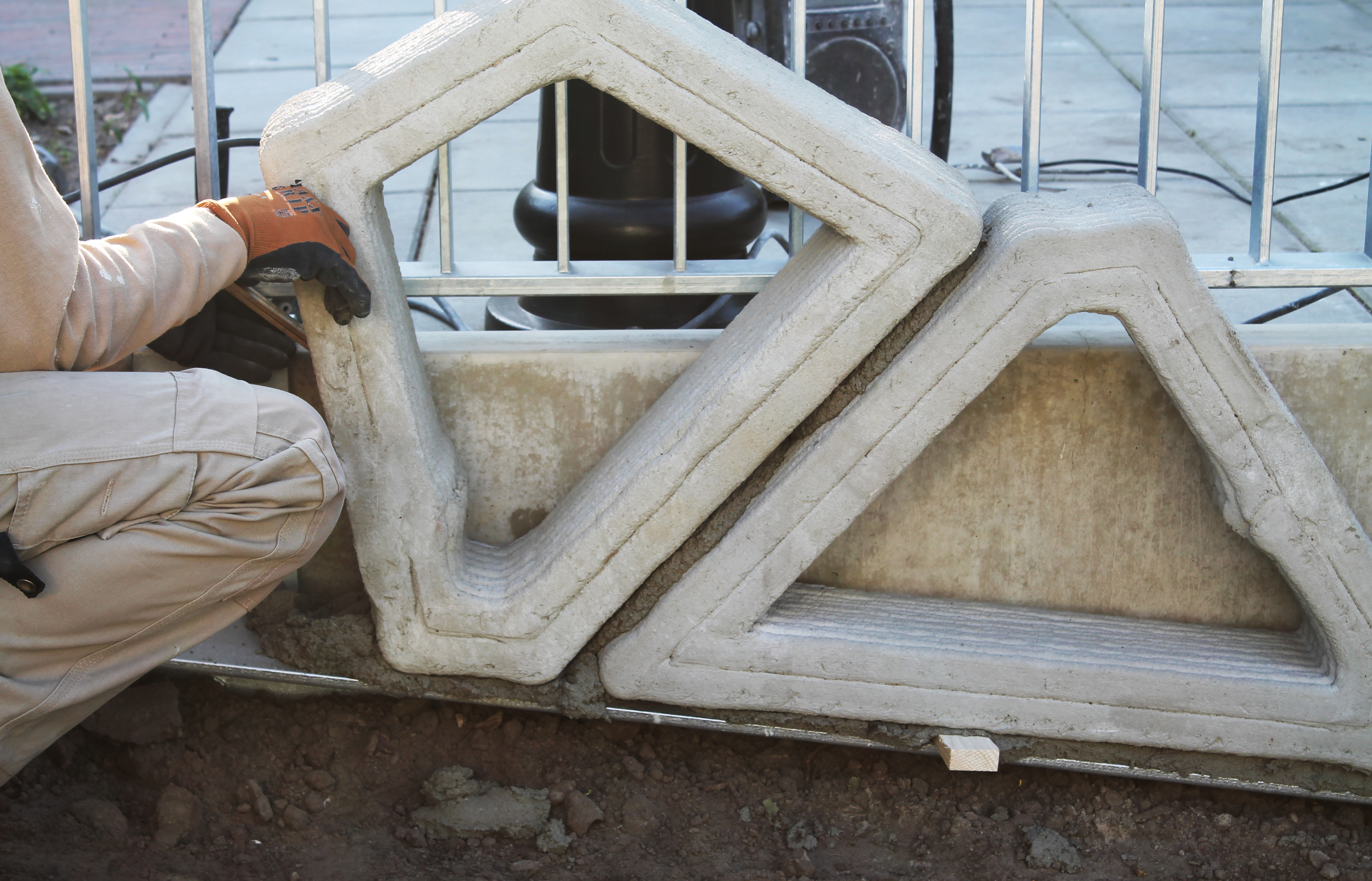
The Green Façade is the first 3D concrete printed structure in Twente realized by the cooperation between Saxion Industrial Design Research Group, De Witte van der Heijden Architecten, Vertico Large Scale 3D printing and Trebbe.
George de Witte from De Witte van der Heijden suggested that the structure be created for the interior garden of Stepping Stones’ building realized by Trebbe. The basic design was developed by Iman Hadzhivalcheva with project manager – Ivo Vrooijink.
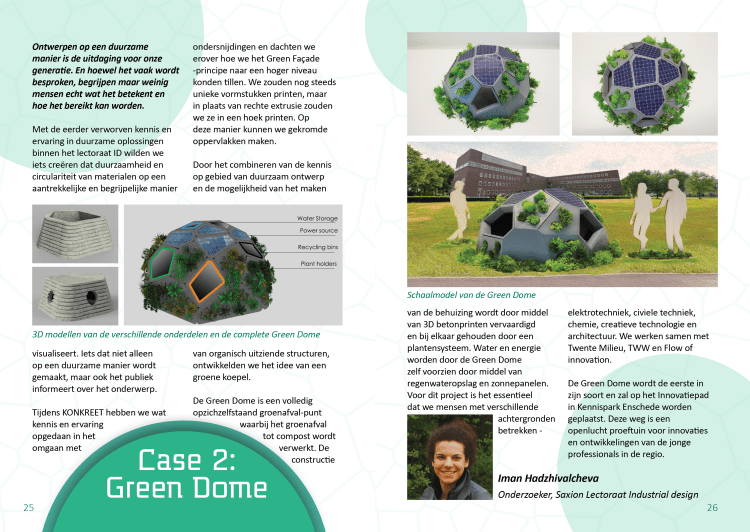
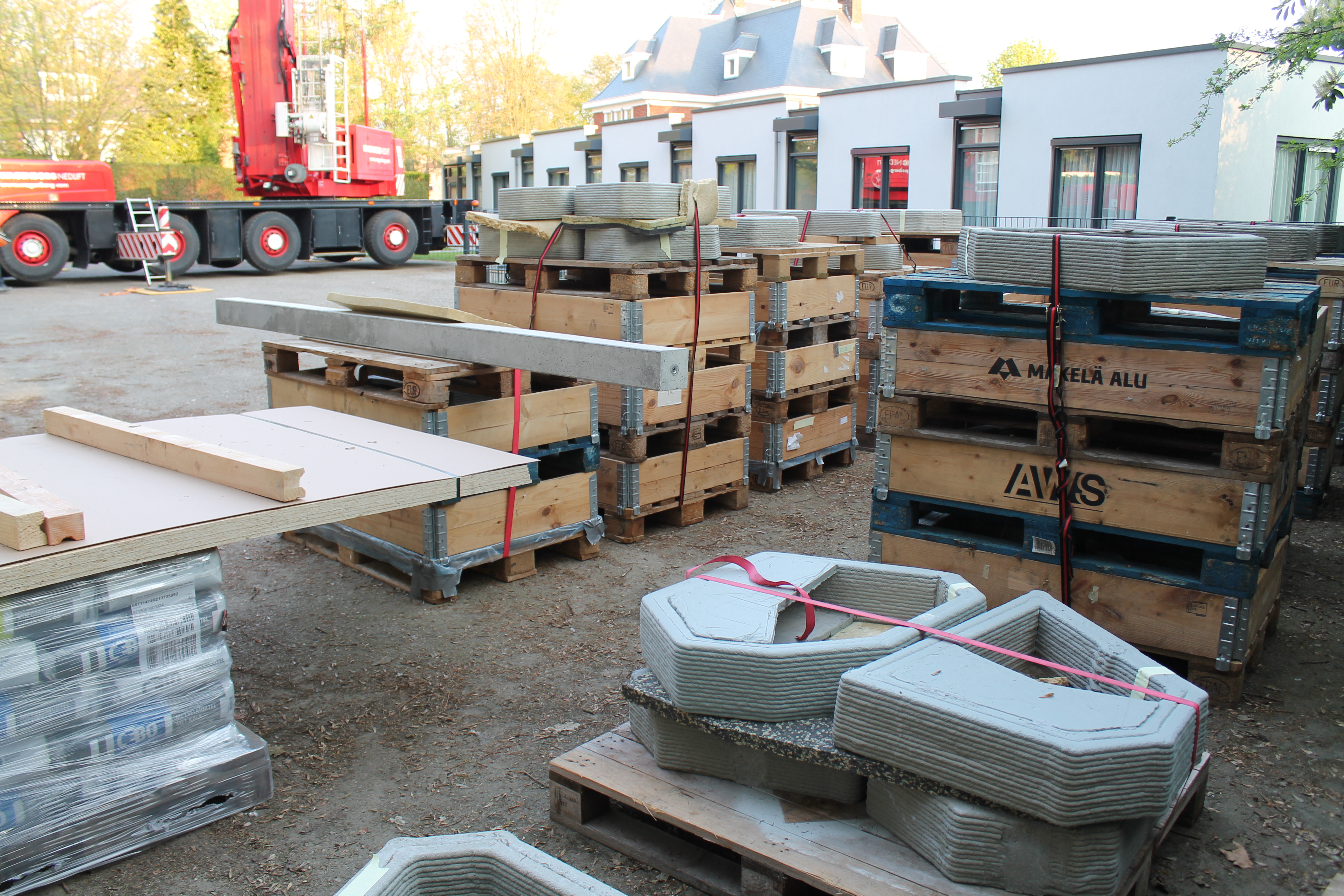
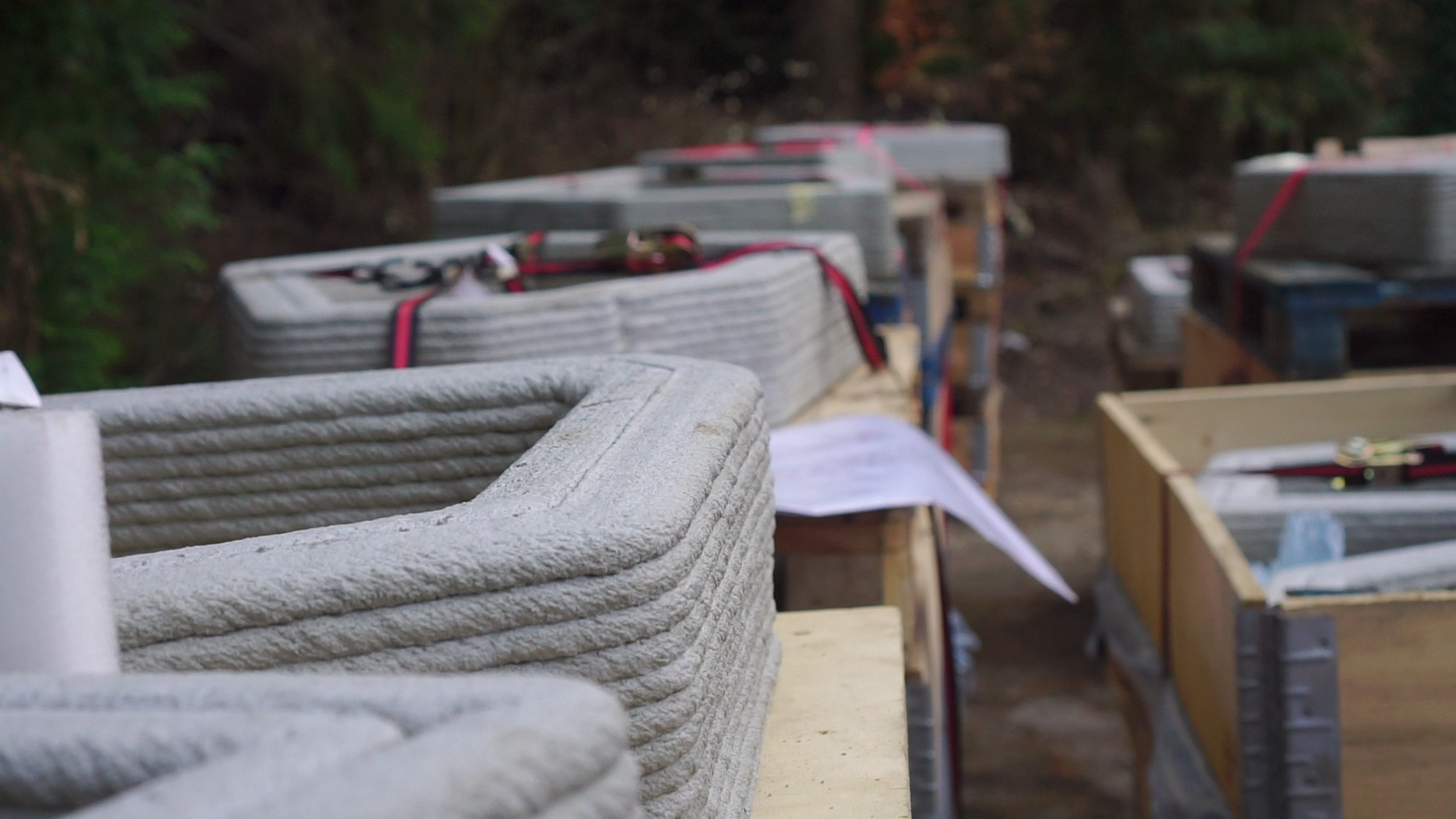
The final design was made via parametric modelling in which each piece was made to have unique form, fit on a palette for easier transportation and weight under 50 kg so the big structure can be built by stacking the pieces on top of each other by two people.
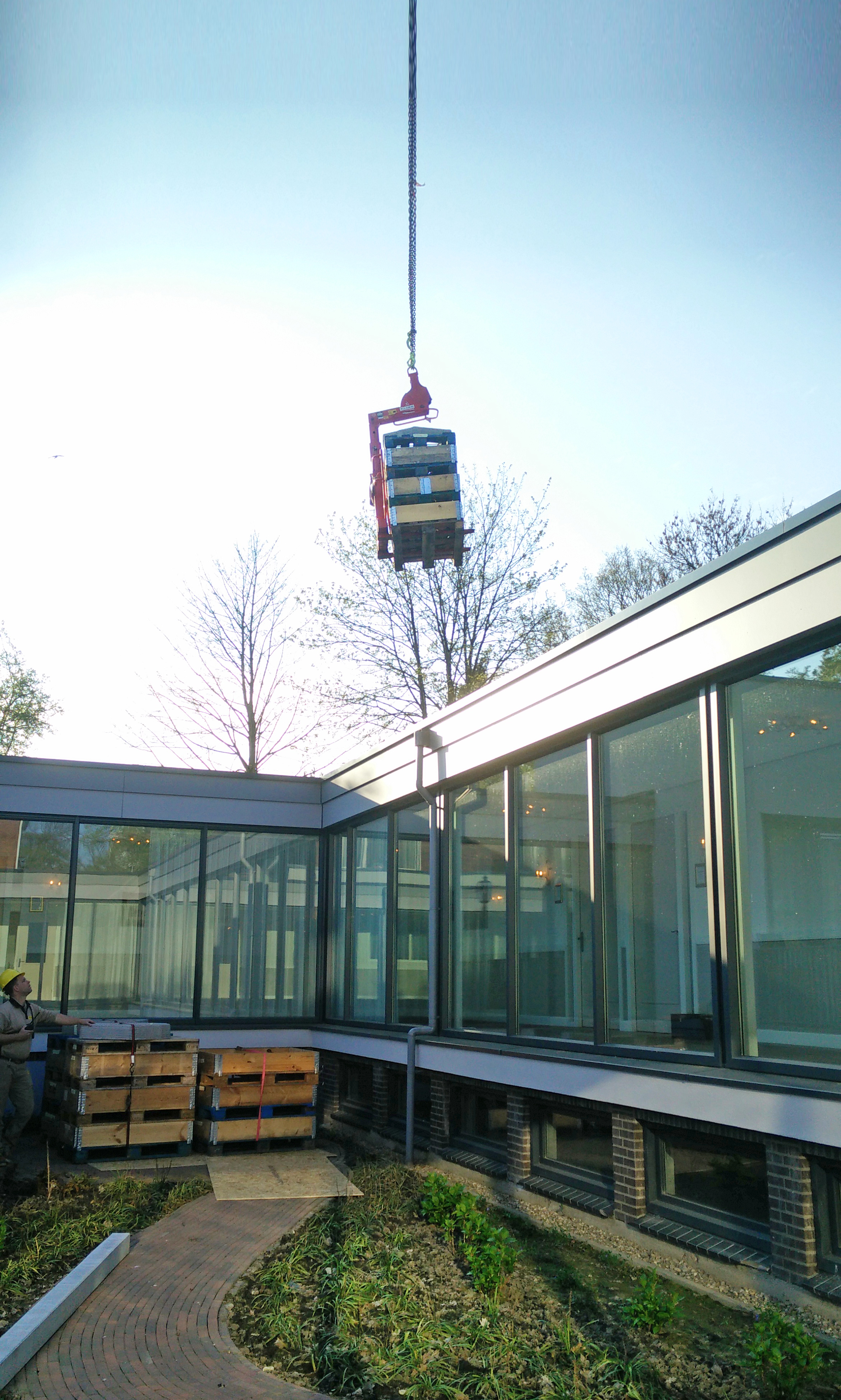
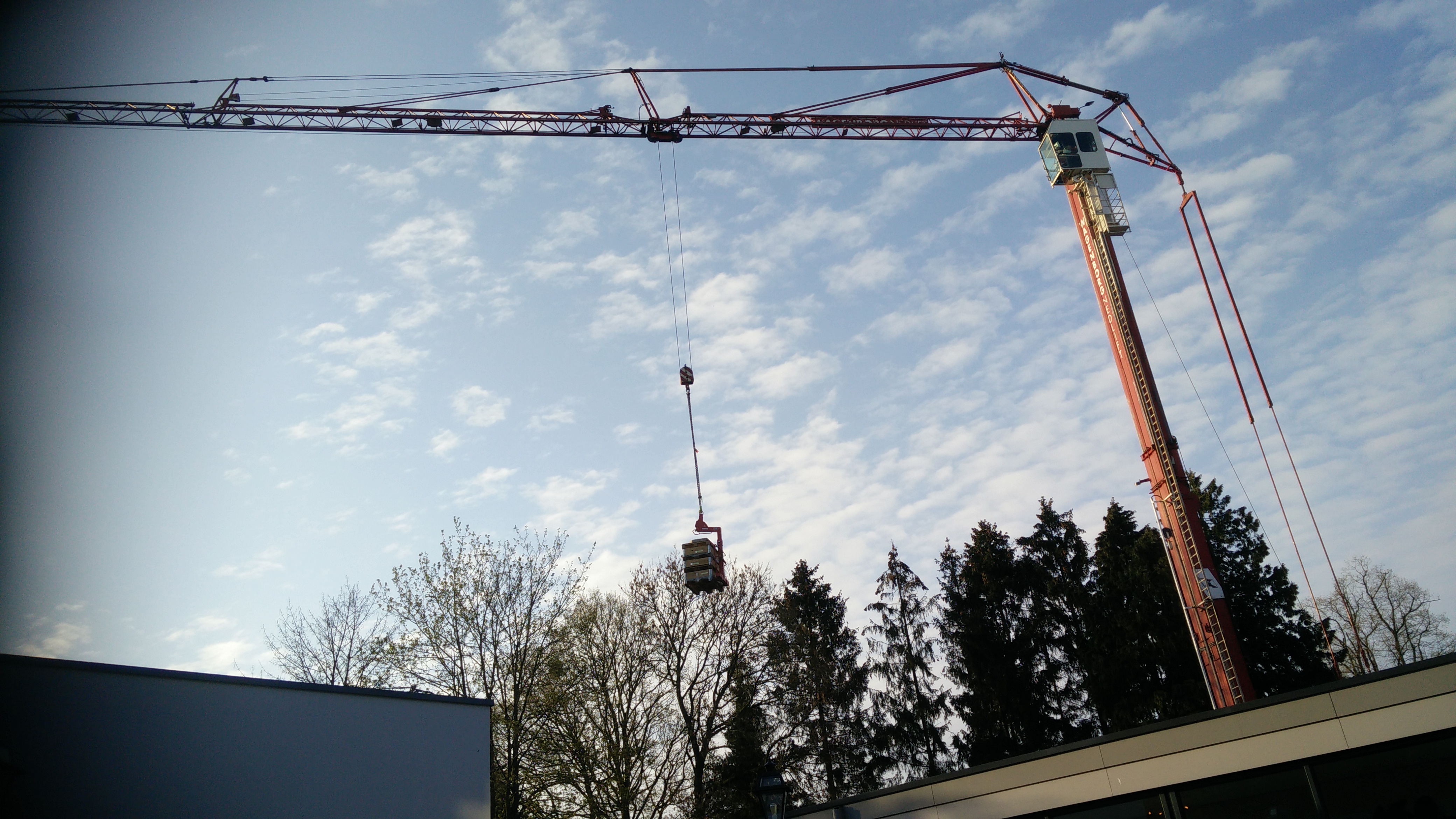
The 50 unique elements were printed using our large ABB robot arm and a gantry by Rohaco. The façade weights approximately 2,5 tons. The transport and installation was managed by Trebbe.